Three platforms.
One integrated engine

DotBio's proprietary technology stack enables rapid generation, testing, and selection of multi-specific and intracellular antibody therapies — at a scale traditional pharma cannot match.

01 — DotBody™ 02 — iDotBody™ 03 — teVLP™ 04 — Hot-CoFi™ & Structure-guided Design 05 — AI & Automation

01 — DotBody™

Fully human, superstable VH domain antibodies generated entirely in vitro — no animal immunization required. DotBodies are derived from a clinically validated human germline with demonstrated 0.1% immunogenicity (same lineage as Herceptin, Avastin, Xolair).

Unlike nanobodies from llamas or camels, DotBodies are indistinguishable from human antibody sequences — eliminating the immunogenicity risk that has caused clinical failures in competing platforms (ADA rates of 28–69% in nanobody-based drugs).

Fully human germline — patent granted US, EU & Japan
Superstable: Tm routinely around 70°C — well within the developability range (e.g. IL2neg: 70°C vs 48°C wild-type)
94% success rate generating binders against any target
>70% of binders below 50 nM affinity; pM after maturation
96 multi-specific prototypes produced per week
5–10 g/L yields in stable cell lines; 20–50 mg/mL concentrability
Patent Granted: US · EU · Japan  |  Pending: CN  |  FTO completed in US
Others — Nanobody / llama approach
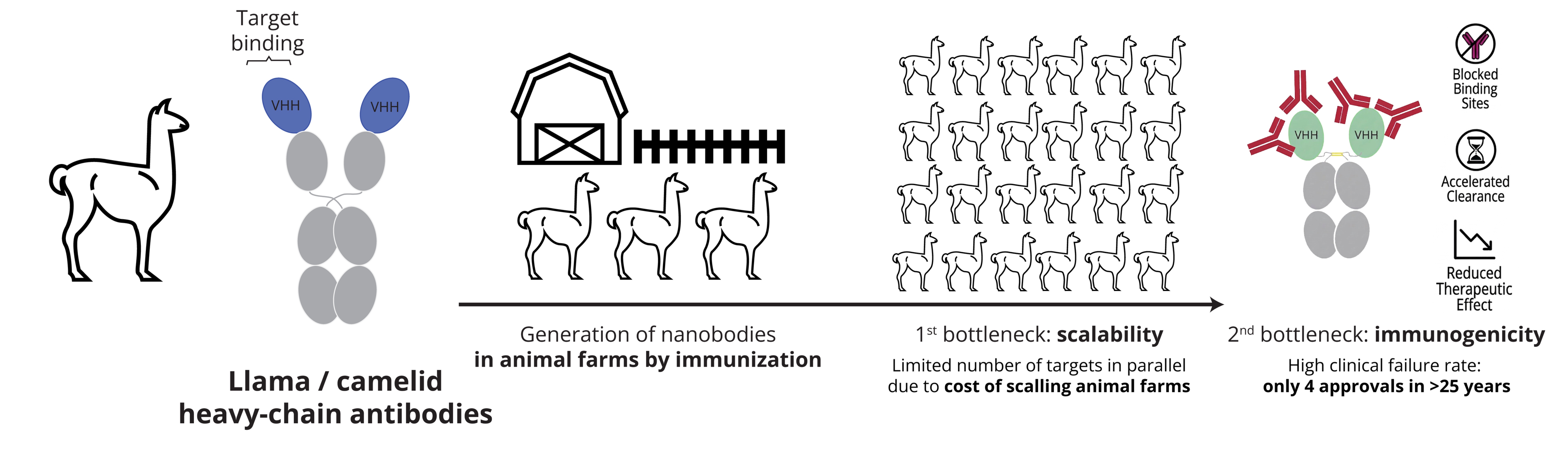
Nanobody approach — scalability and immunogenicity bottlenecks
Click to enlarge
DotBio — DotBody approach
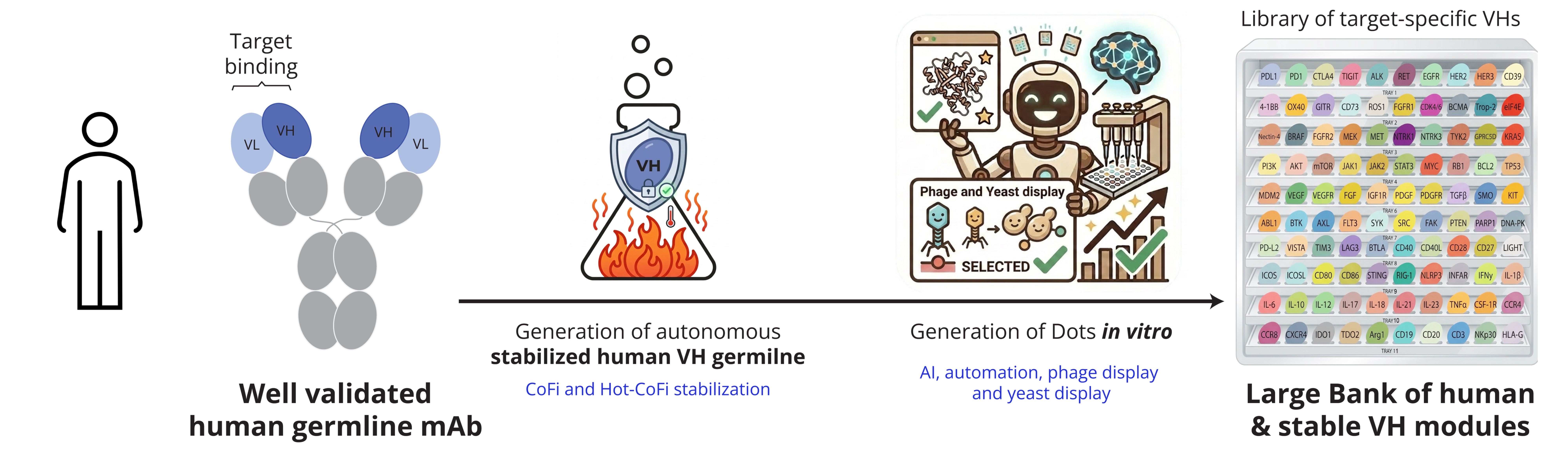
DotBody — fully human, scalable, in vitro
Click to enlarge
Highly scalable and predictable platform
94%
Target hit rate
5–10 g/L
Expression yield
96/week
Prototypes made
40+
Validated modules
Immunogenicity comparison (ADA rates in clinic)
Drug / Company ADA Rate
KN046 (Alphamab) 69%
M1095 (Ablynx) 61%
Envafolimab (Alphamab) 42%
TAS266 (Ablynx) 28% + Severe AE
Caplacizumab + IS (Ablynx) 9%
DotBody germline (DotBio) ~0.1%
Thermal Stability — DotBody vs Human VH Germlines
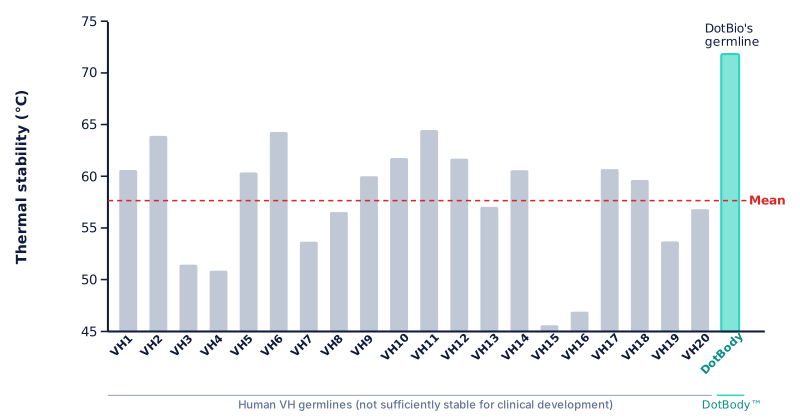
DotBody thermal stability vs all human VH germlines
DotBio's proprietary germline outperforms every naturally occurring human VH germline in thermal stability — a direct result of our Hot-CoFi engineering process. Superior stability translates to better manufacturability, longer shelf life, and reduced clinical risk.
Modular Design Platform
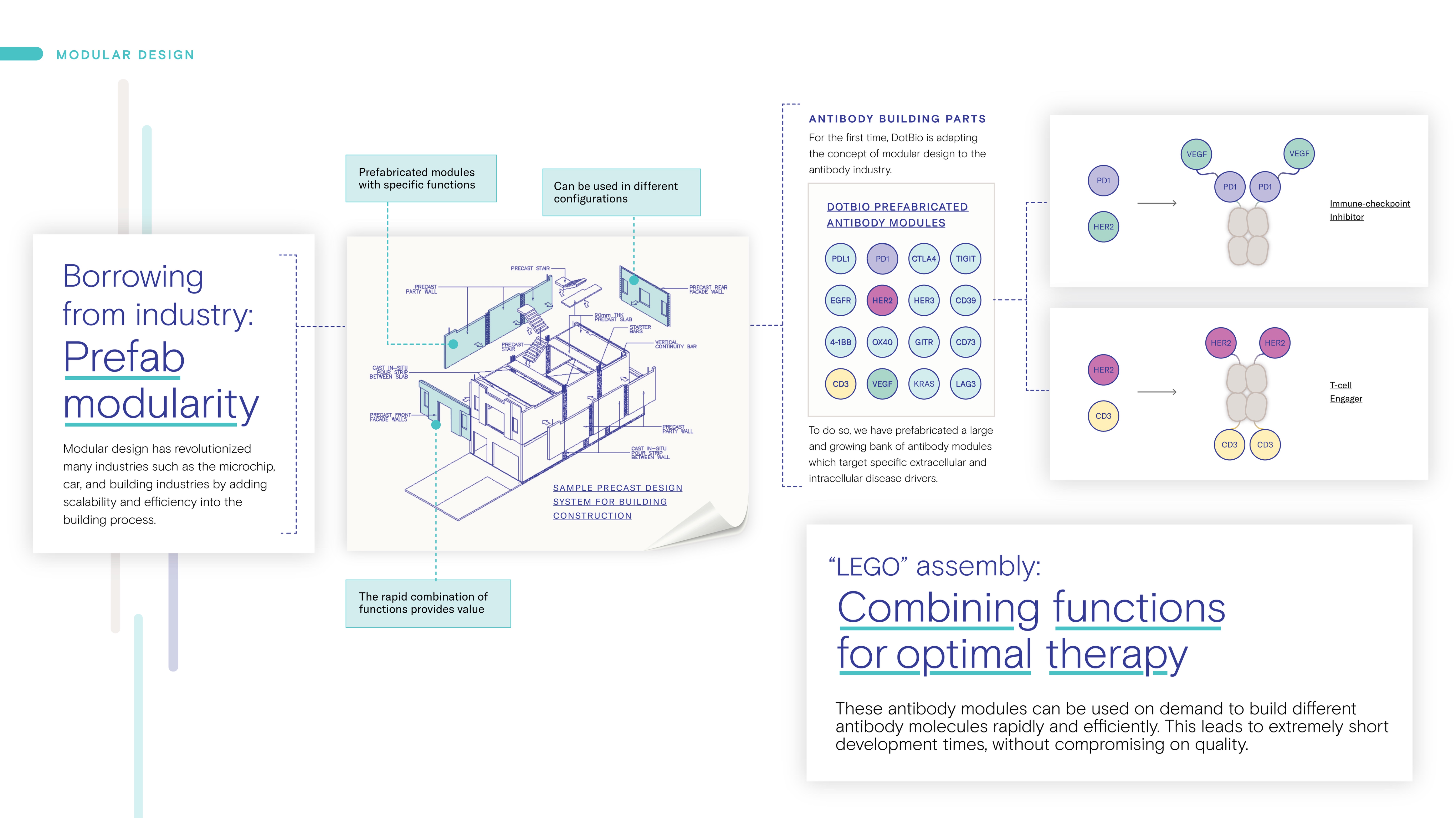
DotBio modular design — LEGO assembly of antibody modules
Prefabricated DotBody modules combine like LEGO blocks to rapidly assemble bi- and tri-specific antibody therapies — dramatically reducing development time without compromising quality.

DotBody module library
"A large and growing bank of human, stable antibody modules"
Current DotBody Module Library
New modules can be generated against any target in ~4 months
Immune Checkpoints
PD1 PDL1 CTLA4 TIGIT LAG3 PVRIG
Cancer Targets
HER2 HER3 EGFR VEGF ANG2 CD71 GLUT1 Cldn4
Immune Activators
CD3 4-1BB OX40 GITR ICOS CD28
TME & Cytokines
TGFβ CD39 CD73 IL17 IL22 IL23 TNFα TL1A
Intracellular
eIF4E KRAS Grb2 mTOR ERK1 ERK2 NRAS RAF
iDotBody vs conventional antibodies
Conventional mAb
Requires disulfide bonds → unstable in cytoplasm
Cannot enter cells
Limited to extracellular targets
iDotBody™
Disulfide-free → stable in reducing cytoplasm
Delivered via teVLP into cell cytoplasm
Targets undruggable intracellular proteins
eIF4E
First target — 0.05 nM
Nat. Comms
Published 2022

iDotBody™

The intracellular frontier of antibody therapy. iDotBodies are DotBody variants engineered without disulfide bonds, making them stable in the reducing environment of the cell cytoplasm — something conventional antibodies cannot survive.

The first validated target is eIF4E — a key regulator of protein translation upregulated in many tumors. DotBio's anti-eIF4E iDotBody blocks the eIF4G interaction site, which is undruggable by small molecules, inhibiting cancer cell growth in validated models.

Disulfide-free scaffold — stable in cytoplasm
Targets flat protein-protein interaction surfaces inaccessible to small molecules
Validated: anti-eIF4E VH inhibits cancer cell growth when expressed in cytoplasm
Published in Nature Communications (2022)
Subsequent targets: full KRAS pathway, JAK/STAT pathway

teVLP™

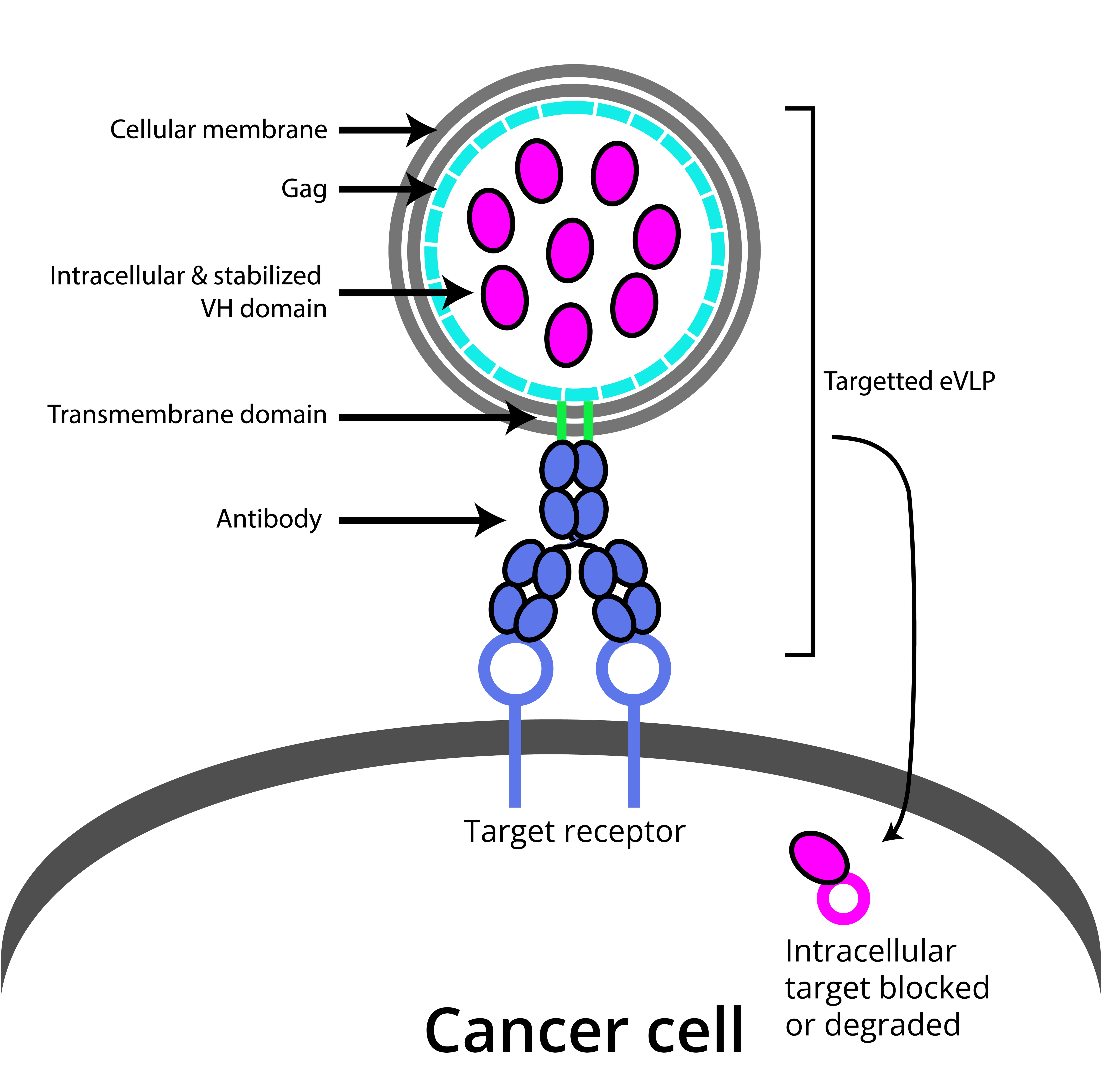
The delivery solution for intracellular antibodies. Targeted engineered Virus-Like Particles (teVLPs) are produced from human HEK293 cells using a GAG protein budding mechanism — packaging iDotBodies inside a human membrane vesicle.

A targeting antibody on the VLP surface provides cell-type specificity. Upon binding, VLPs release their cargo via membrane fusion — bypassing endosomal degradation entirely. Patent filed.

Human membrane vesicle — immune-compatible
Cell-specific delivery via surface-anchored targeting antibody
Membrane fusion release — no endosomal trap
Validated: HER2-targeted VLPs deliver anti-eIF4E iDotBody into HER2-high cancer cells
Demonstrated growth inhibition in BT474 and SKBR3 cell lines
No effect on HER2-low cells — high selectivity
Patent Filed
teVLP targeted engineered virus-like particle delivering iDotBody into cancer cell
Click to enlarge
Cell-specific delivery confirmed · Growth arrest in HER2-high cells · No effect on HER2-low cells · Published in 2022
Stabilization results
Example 1 — 4D5 VH germline stabilization
(Hot-CoFi)
49.6°C
4D5 VH germline Tm
72°C
DotBody™ germline Tm
Example 2 — IL2 stabilization
(Structure-guided)
48°C
IL2 wild-type Tm
70°C
IL2neg stabilized Tm
Example 3 — Highly functional antibody libraries
(Hot-CoFi + Structure-guided)
30–50%
Functional clones in library
1.5×10¹¹
Library size
Published in
Nature Methods (2005) · Nature Communications (2013)
Cornvik T. et al. · Asial I. et al.

Hot-CoFi™ &
Structure-guided Design

Hot-Colony Filtration (Hot-CoFi) is DotBio's proprietary stabilization technology — a biophysical screen performed at the bacterial colony level that identifies the most stable, soluble VH variants from directed evolution libraries.

The technology filters out aggregating variants before they ever reach production, yielding DotBodies with dramatically improved thermal stability, solubility, and manufacturability — with Tm values routinely around 70°C, well within the developability range. This directly translates to better clinical developability and lower immunogenicity risk.

Complementing Hot-CoFi, DotBio applies structure-guided engineering to further improve protein properties. Using high-resolution 3D structures or AlphaFold-predicted models, we design mutations that enhance both thermal stability and binding affinity — enabling precise, targeted improvements beyond what unbiased screening alone can achieve.

Screens at colony level — no protein production needed to identify stable variants
Filter removes aggregates; membrane captures soluble, folded VHs
Enables 30–50% functional clones in library vs typical <5%
Structure-guided design using experimental 3D structures and AlphaFold models
Improves both stability (Tm) and binding affinity through rational mutation design
Validated across multiple targets including IL2, VH germlines, and intracellular binders

AI & Automation

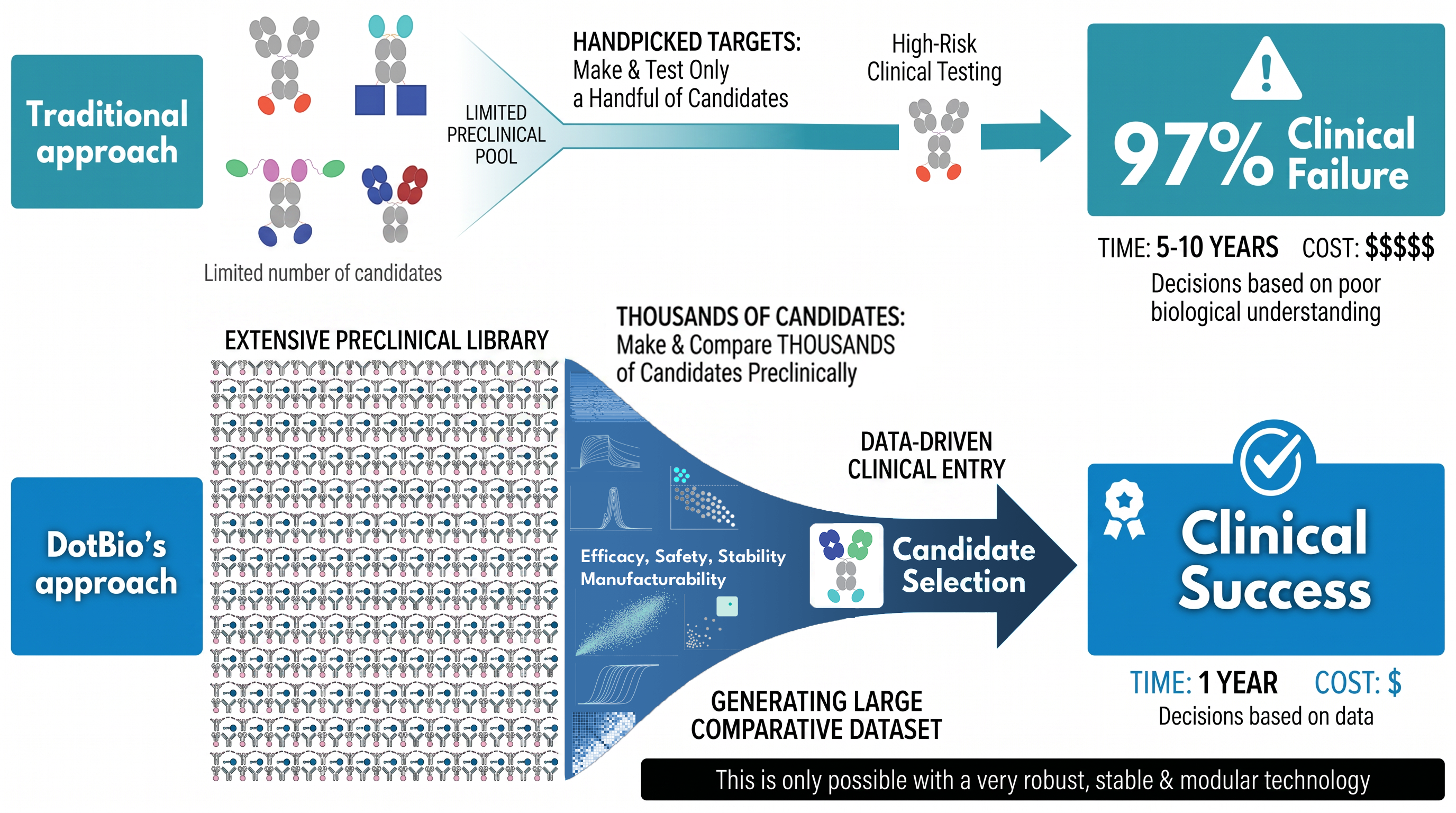
DotBio's platform doesn't just generate antibody candidates — it generates large comparative datasets on thousands of candidates in parallel, then uses AI-assisted analysis to identify the best molecules for the clinic. This data-driven approach is what reduces clinical failure risk from 97% to a fraction of that.

Traditional pharma vs DotBio approach
Traditional pharma 97% failure vs DotBio data-driven clinical entry
Traditional pharma hand-picks a handful of candidates and enters high-risk clinical testing — resulting in a 97% failure rate over 5–10 years. DotBio generates thousands of candidates preclinically, produces large comparative datasets, and selects only the best for the clinic. Time to candidate: ~1 year.
End-to-end discovery workflow — from design to clinical candidate
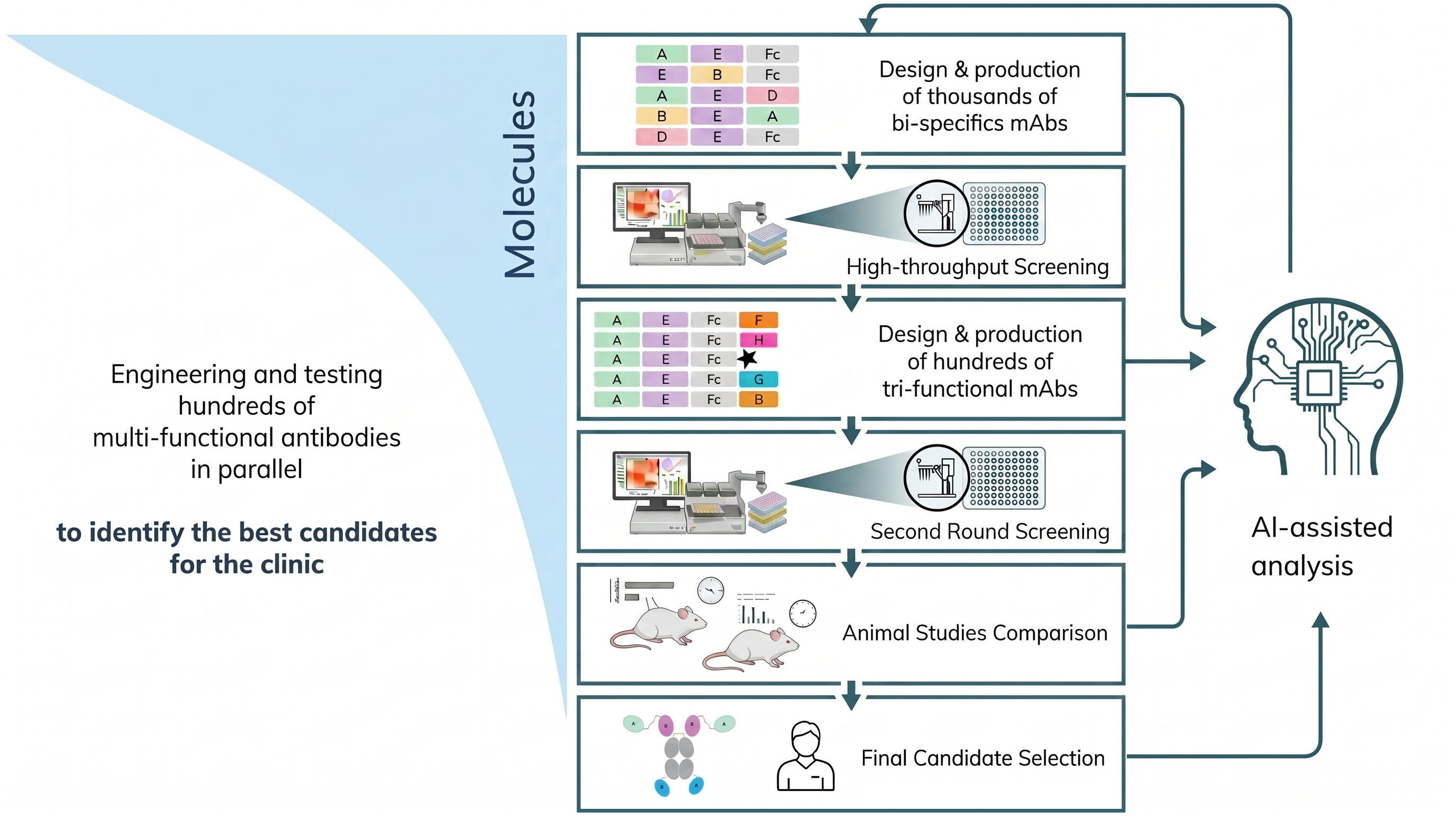
DotBio high-throughput workflow: design thousands of bi- and tri-specifics, screen, animal studies, AI-assisted analysis, final candidate selection
Engineering and testing hundreds of multi-functional antibodies in parallel — to identify the best candidates for the clinic. AI-assisted analysis predicts next-generation molecules and feeds back into the design cycle.
High-throughput immune-oncology assay — multi-parametric panel screening
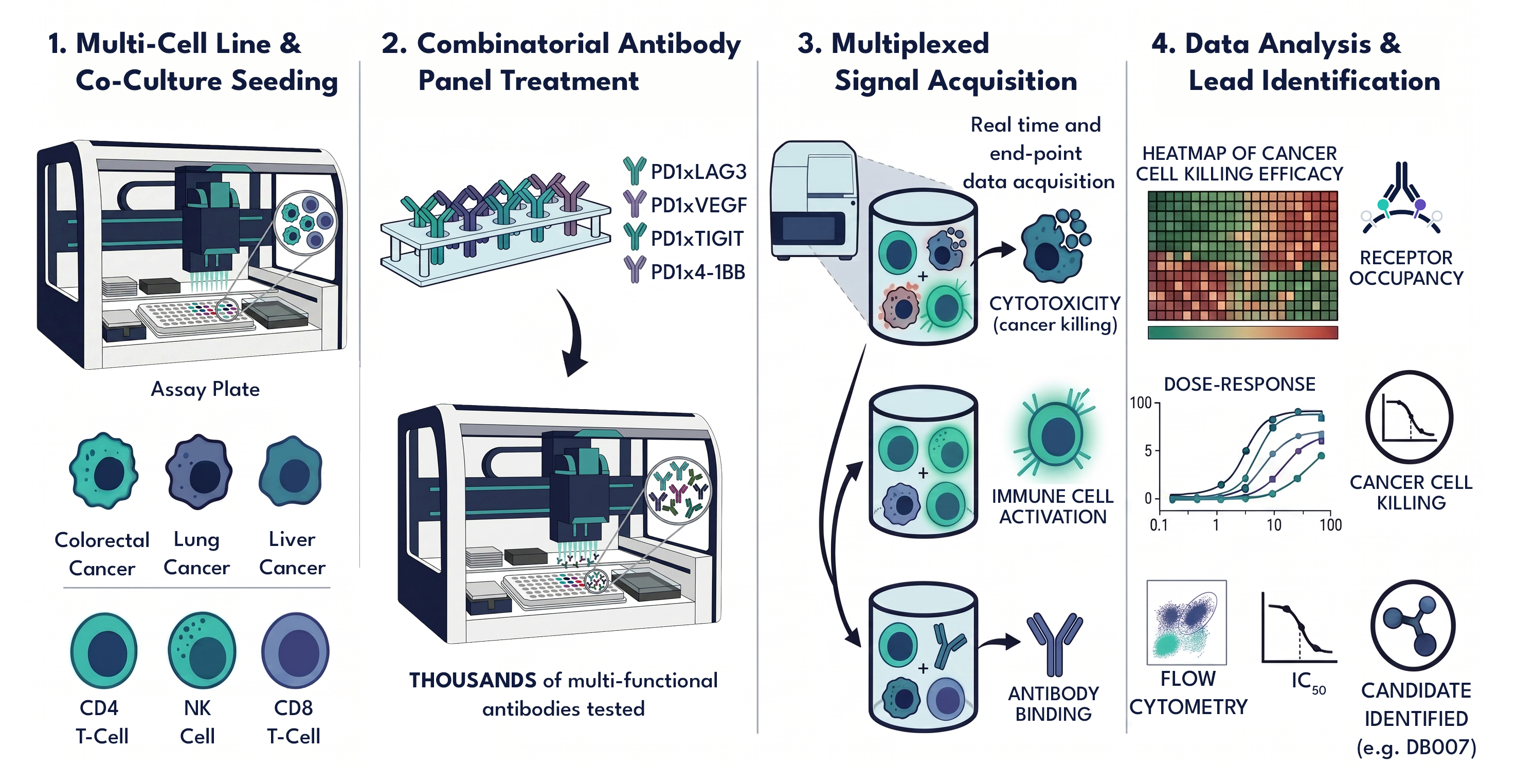
High-throughput immune-oncology assay: multi-cell line co-culture, combinatorial antibody treatment, multiplexed signal acquisition, data analytics and lead identification
Each week: 96+ multi-specific prototypes produced and tested across thousands of treatment combinations — measuring cytotoxicity, immune cell activation, and antibody binding maps simultaneously. The result is a large, comparative dataset that makes candidate selection a data-driven decision, not a guess.
Predictive capabilities — clinical outcomes identified preclinically
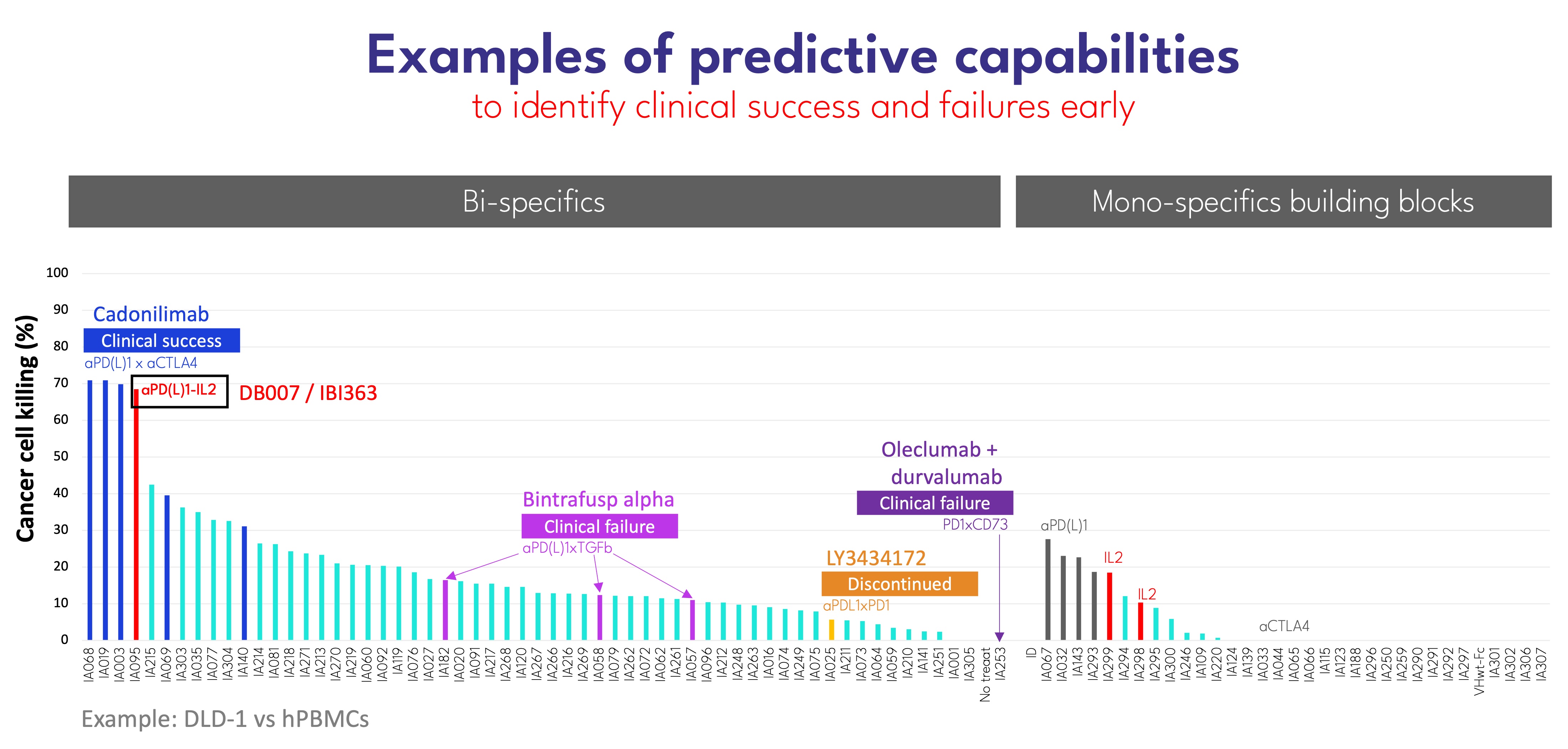
DotBio predictive screen showing cancer cell killing % — Cadonilimab (clinical success), DB007/IBI363 class (in development), Bintrafusp alpha and Oleclumab+durvalumab (clinical failures) identified preclinically
DotBio's platform screened hundreds of bi-specific candidates against colorectal cancer cells (DLD-1) vs human PBMCs. The results predicted clinical outcomes with striking accuracy — before they were known: Cadonilimab → Clinical success ✓ DB007 / IBI363 class → In development ✓ Bintrafusp alpha → Clinical failure ✗ Oleclumab + durvalumab → Clinical failure ✗ LY3434172 → Discontinued ✗
96+
Multi-specific prototypes
produced per week
~90%
Success rate producing
any multi-specific mAb
Thousands
Candidates compared
preclinically per program
~1 year
From design to
clinical candidate
384-well
Miniaturized assay plates
for maximum throughput
AI-assisted
Analysis predicts
next-gen molecules

Want to build with our platform?

License DotBody modules, co-develop new assets, or explore a NewCo structure. New modules against your targets of interest can be generated in ~4 months.

Explore Partnerships →